Renewance
Problem: Industrial clients tracked batteries across disconnected tools. I led product design for Renewance Connect—a B2B platform with a scalable design system built from scratch.
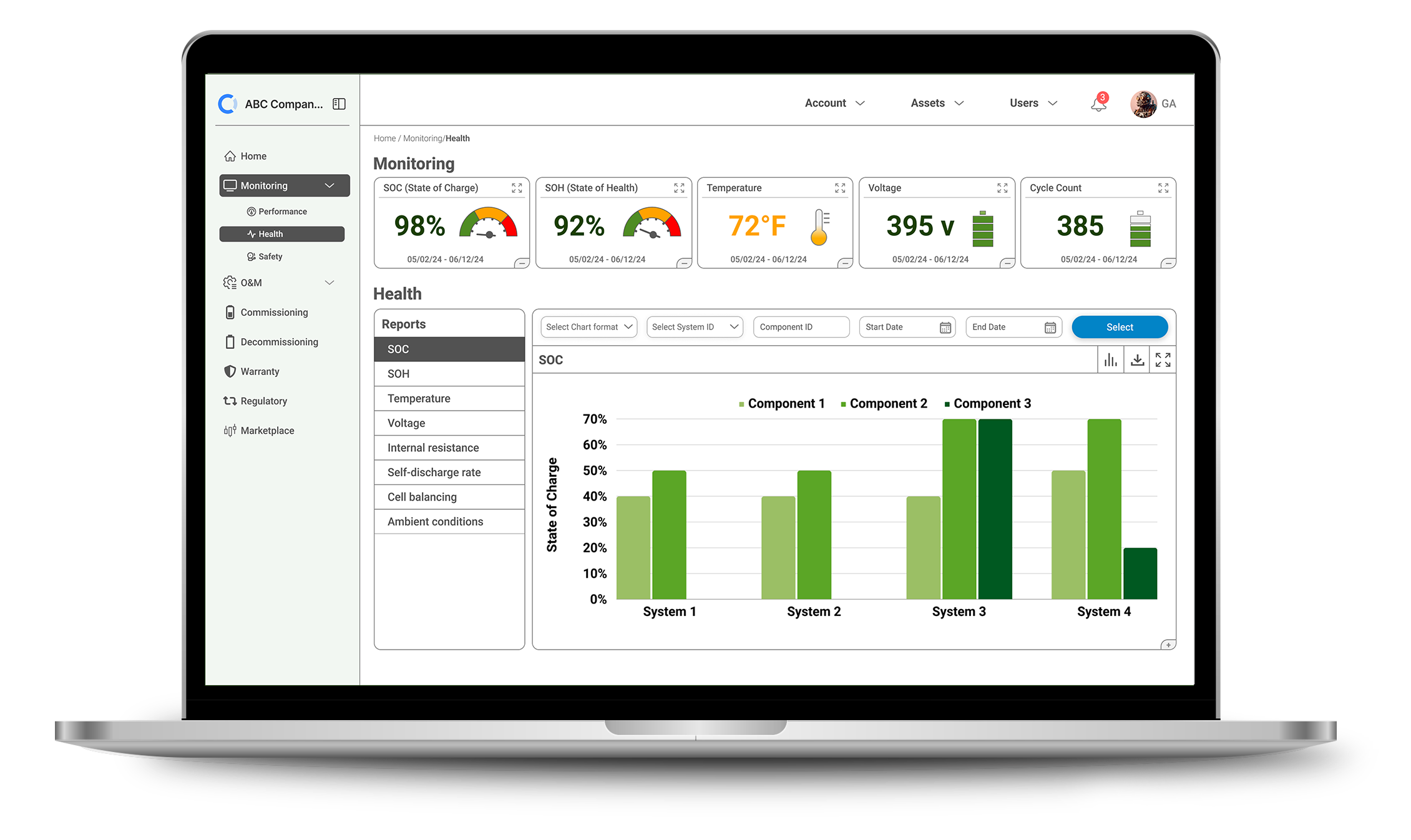
Developed a scalable web application for comprehensive battery monitoring, management, e-commerce, and advanced features, revolutionizing how clients monitor industrial batteries.
Senior UX/UI Designer
Dec 2023 – Mar 2024
Web Application
Product Manager, 3 Developers, Stakeholder
- •Built a scalable Figma design system from scratch using tokens and nested components
- •Launched comprehensive battery management platform beyond Salesforce
- •Aligned executives on roadmap through data-informed design recommendations
- •Streamlined e-commerce integration for parts and services
Introduction
Renewance Inc. is a leader in industrial battery life cycle management. The project involved creating a robust web application from scratch to revolutionize how clients monitor and manage a diverse range of batteries—from large industrial units to those in electric vehicles.
The Challenge
Develop a scalable web application for comprehensive battery monitoring, management, e-commerce, and advanced features, significantly expanding capabilities beyond existing systems like Salesforce. Clients needed a unified view of fleet health, inventory, services, and marketplace transactions.
My Role
As Lead UX/UI Designer, I led product design for Renewance Connect from discovery through delivery. I built a scalable Figma design system using tokens, variables, and nested components, and aligned executives on roadmap decisions through clear, data-informed recommendations.
Figma, Miro, Jira
User Research
Interviewed industrial clients about battery monitoring workflows, mapped inventory and service touchpoints, and validated dashboard information architecture with stakeholders before high-fidelity design.
- •
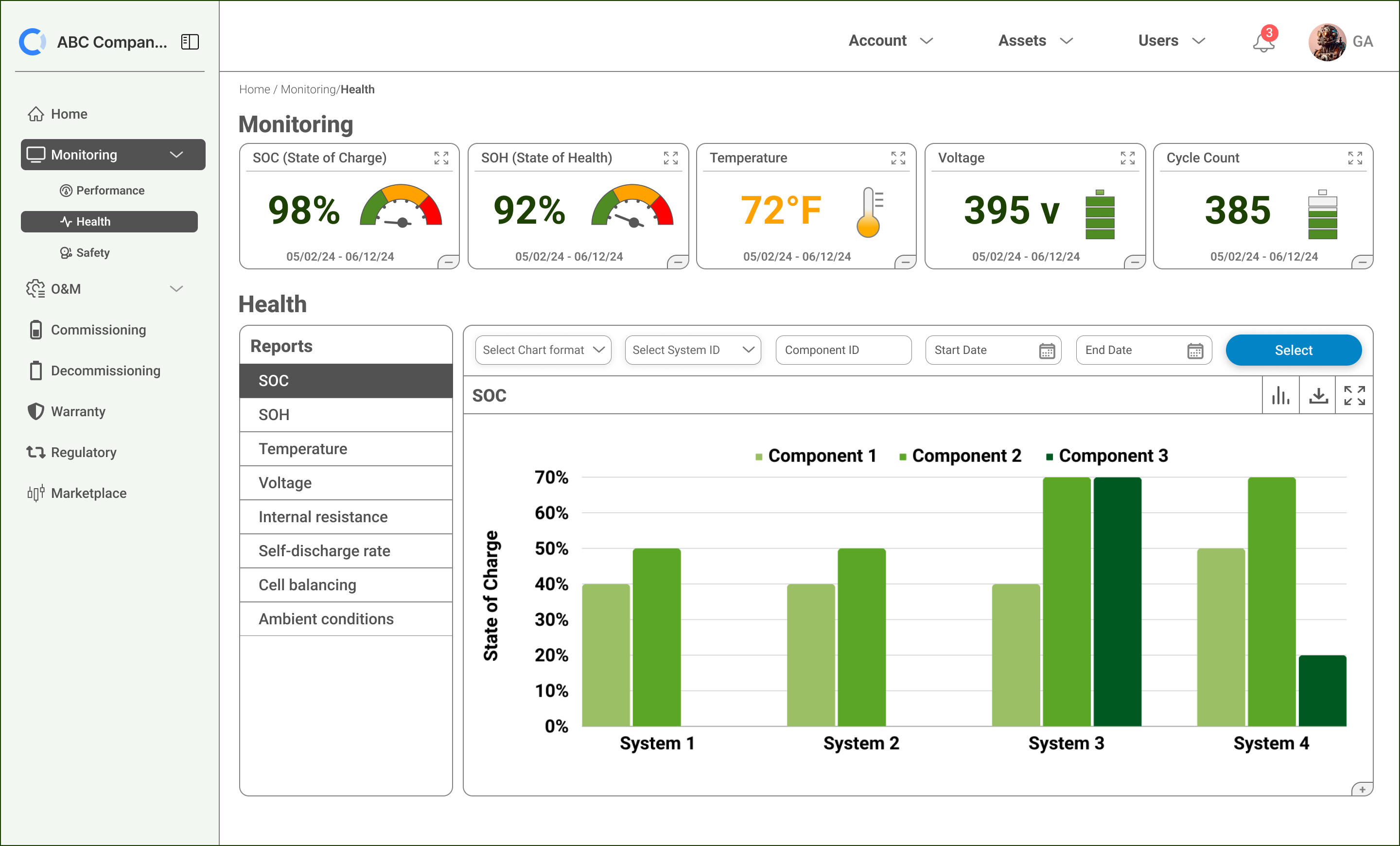
Operators needed fleet-level health at a glance before drilling into individual units
- •
E-commerce for parts/services had to feel native—not bolted onto monitoring tools
- •
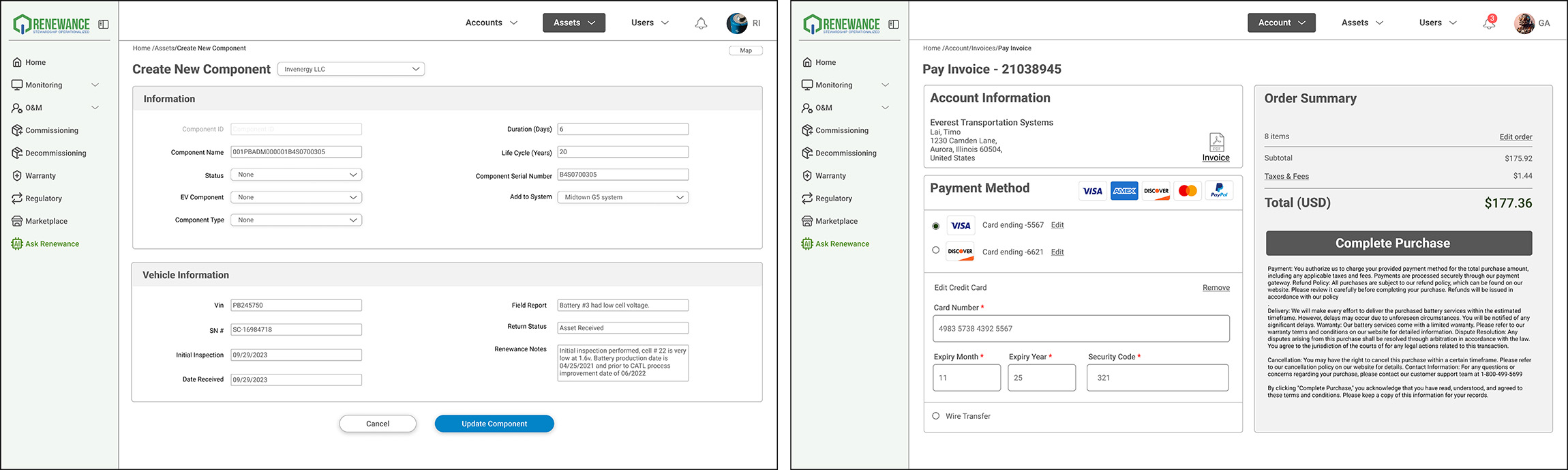
Consistent data tables and forms were critical across accounts with large fleets
- •
Executive stakeholders needed summary views, not operator-level detail
Design Artifacts
Sketches, wireframes, and research artifacts that shaped the solution.

Figma variables and component library overview


What I Designed
Figma, Miro, Jira
Key Solutions
- 01
Designed comprehensive battery monitoring dashboard
- 02
Created intuitive inventory management system
- 03
Built e-commerce integration for parts and services
- 04
Implemented advanced analytics and reporting
Results
- •
Successfully launched comprehensive platform
- •
Design system improved consistency and delivery speed across the product
- •
Positive user feedback on intuitive monitoring and inventory flows
- •
Scalable architecture for future growth
Learnings
Building a design system alongside a greenfield product let the team ship faster without sacrificing consistency. Token-based components made it easier to iterate on data-heavy dashboards as client needs evolved.