Ecolab
Problem: Factory operators couldn't see cross-equipment risk before failures happened. I led UX for an AI operational intelligence platform that helped secure $20M in funding.
Led UX strategy and end-to-end design for an AI-powered operational intelligence platform. Designed predictive dashboards and guided action workflows. Prototyped AI agent concepts with Engineering and Data Science. Contributed to $20M funding for next-generation AI capabilities.
Senior UX/UI Designer, AI Innovation
Jul 2025 – Dec 2025
Web Application
Product Managers, Engineers, Data Scientists
- •Contributed to $20M funding for next-generation AI capabilities
- •Delivered predictive dashboards and guided action workflows
- •Prototyped AI agent concepts adopted by the engineering roadmap
Introduction
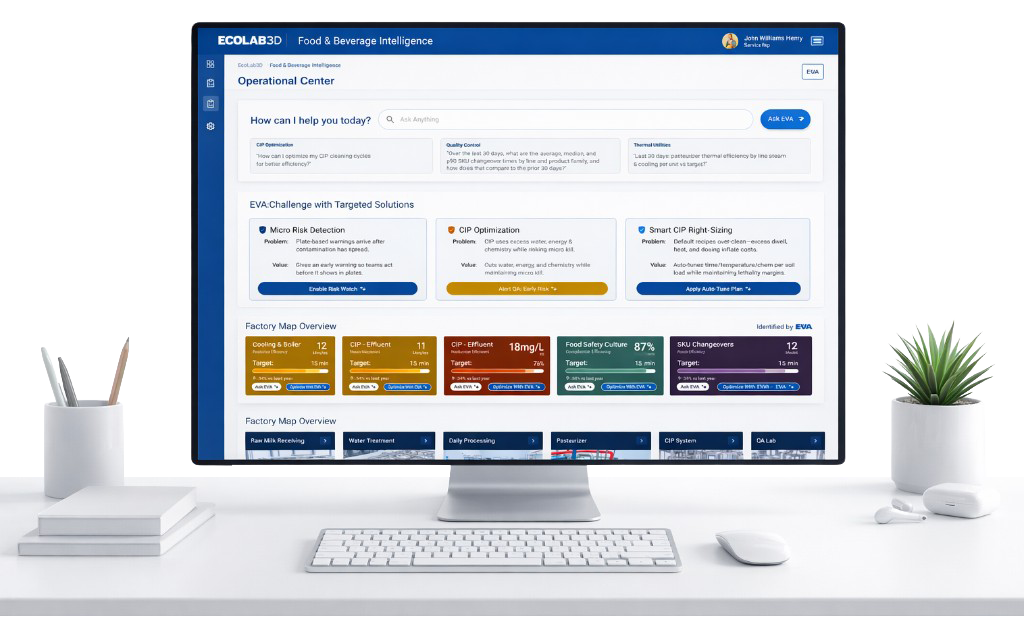
Ecolab needed an AI-powered platform to surface predictive insights and guided actions for food and beverage operations. The domain was complex, the data was dense, and the team needed to demonstrate enough product viability to secure funding for continued investment.
The Challenge
Manufacturing teams manage interdependent equipment, CIP cycles, and quality data across disconnected systems. Operators needed a single place to understand risk drivers, recommended actions, and AI confidence—not raw telemetry dumps.
My Role
Partnered closely with Engineering and Data Science to understand the AI models and their outputs. Led design critiques with cross-functional partners to refine dashboard layouts and action workflows. Prioritized clarity over complexity, focusing the UI on actionable insights rather than raw data.
Figma, FigJam, Miro, Jira
User Research
Mapped factory workflows with operations stakeholders, translated system interdependencies into prioritized AI opportunities, and validated diagnostic and risk-scoring concepts with engineering and data science partners through interactive prototypes.
- •
Operators needed risk drivers explained in plain language, not model scores alone
- •
Progressive disclosure reduced cognitive load on dense factory dashboards
- •
Guided corrective actions had to feel trustworthy—confidence indicators were essential
- •
Cross-equipment insights required a map-based mental model before tabular detail
Design Artifacts
Sketches, wireframes, and research artifacts that shaped the solution.
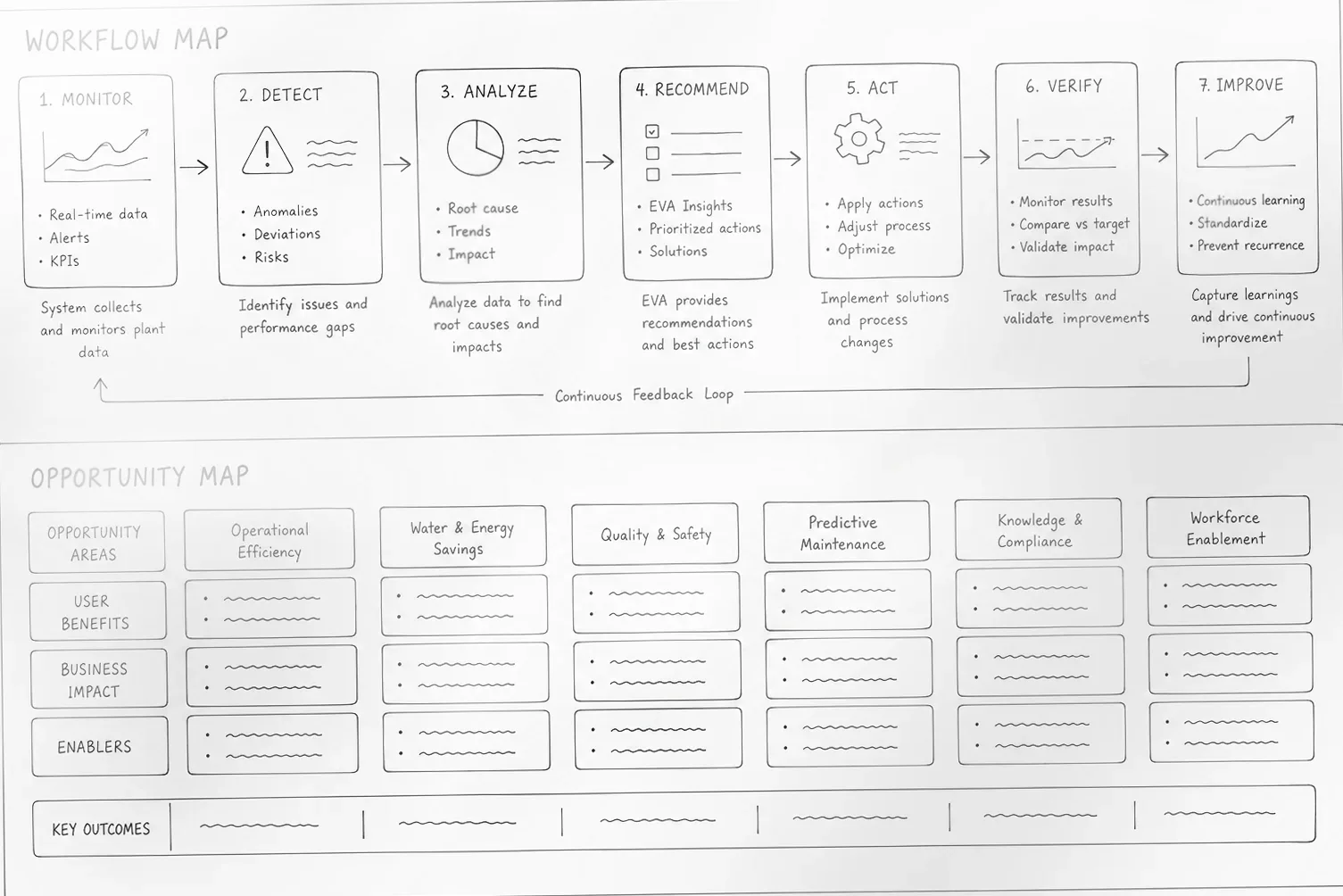

Initial wireframes exploring information hierarchy for predictive views—risk drivers, alerts, and guided actions

What I Designed
Figma, FigJam, Miro, Jira
Key Solutions
- 01
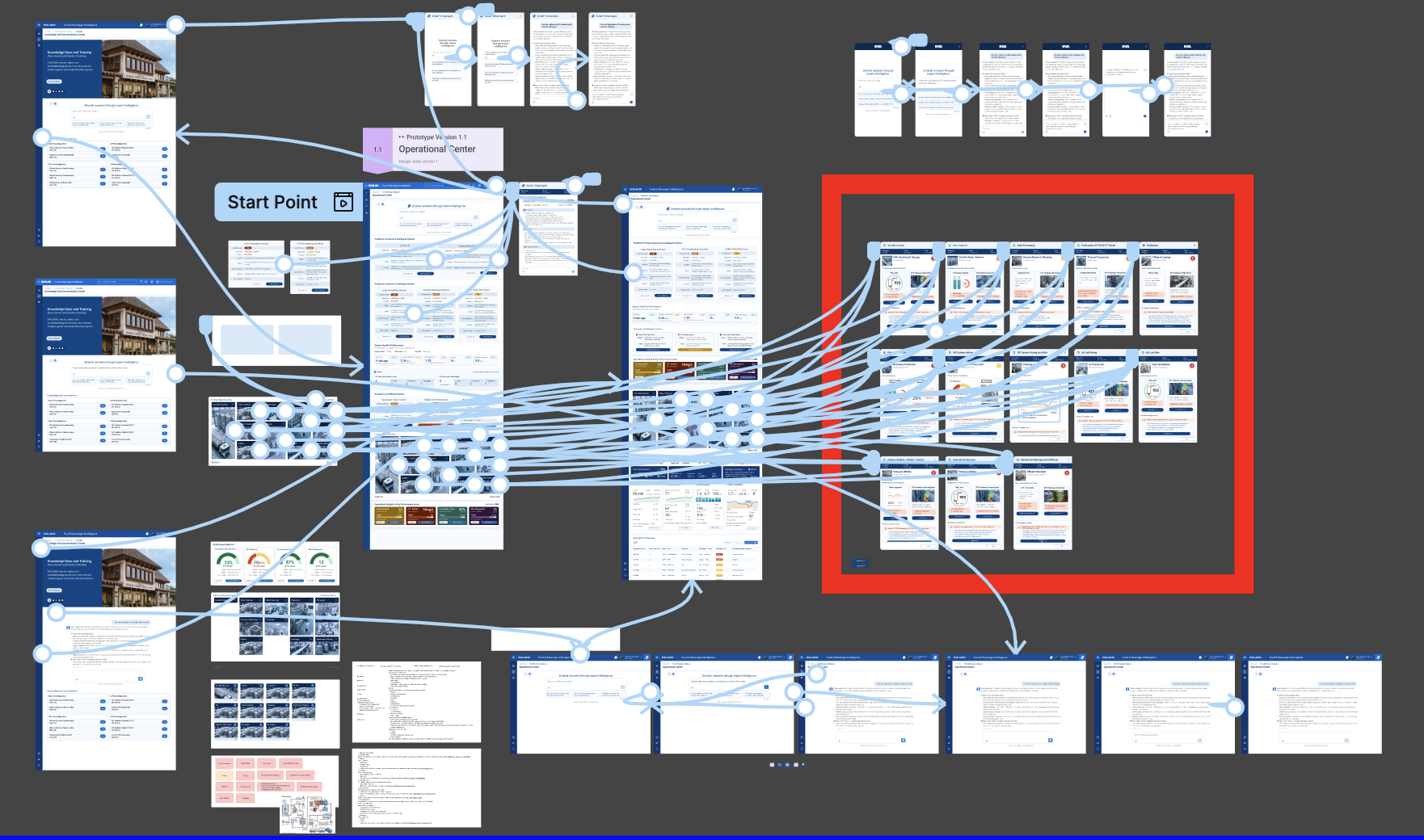
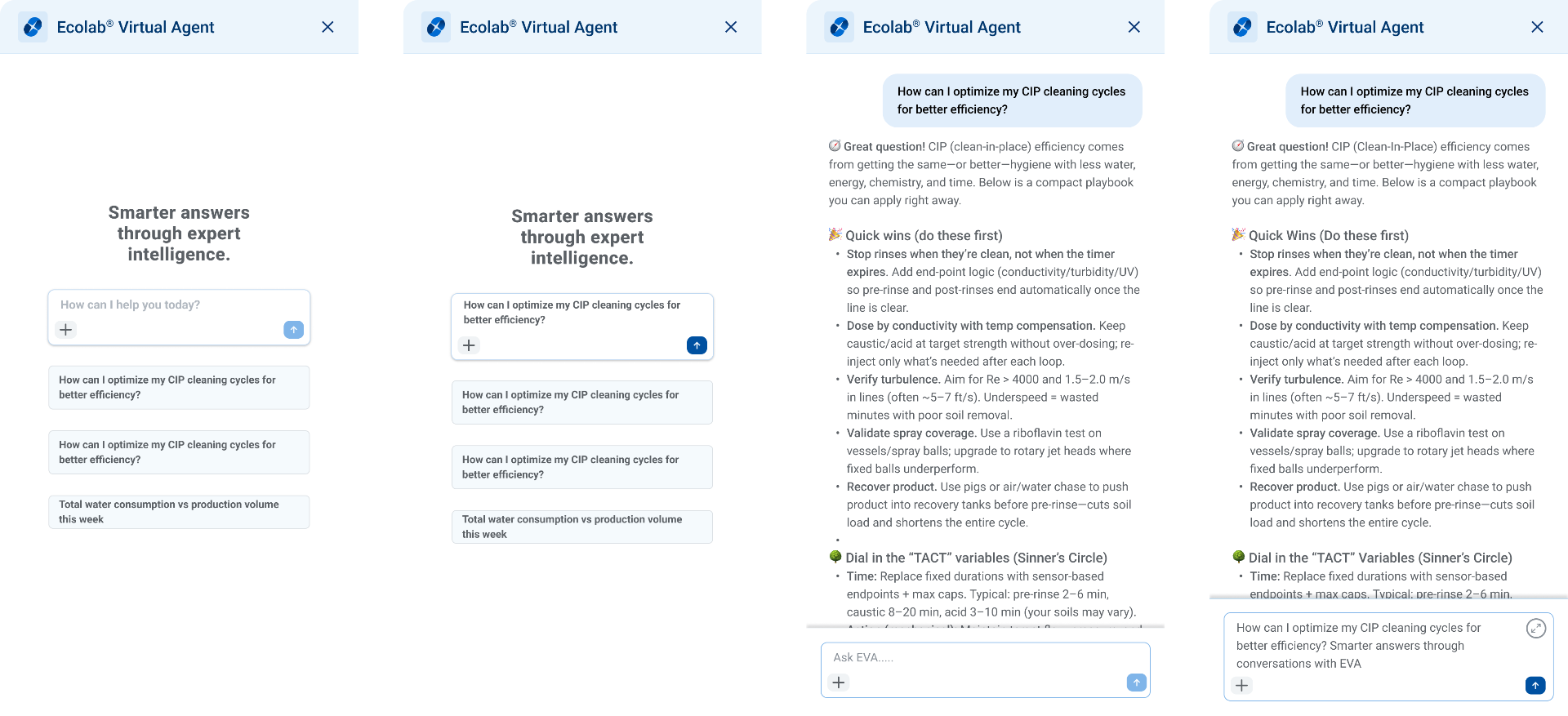
Built interactive Figma prototypes for predictive dashboards and AI agent concepts
- 02
Used AI-assisted workflows in Figma to rapidly explore layout and information hierarchy variations
- 03
Presented prototypes to leadership to demonstrate product viability
- 04
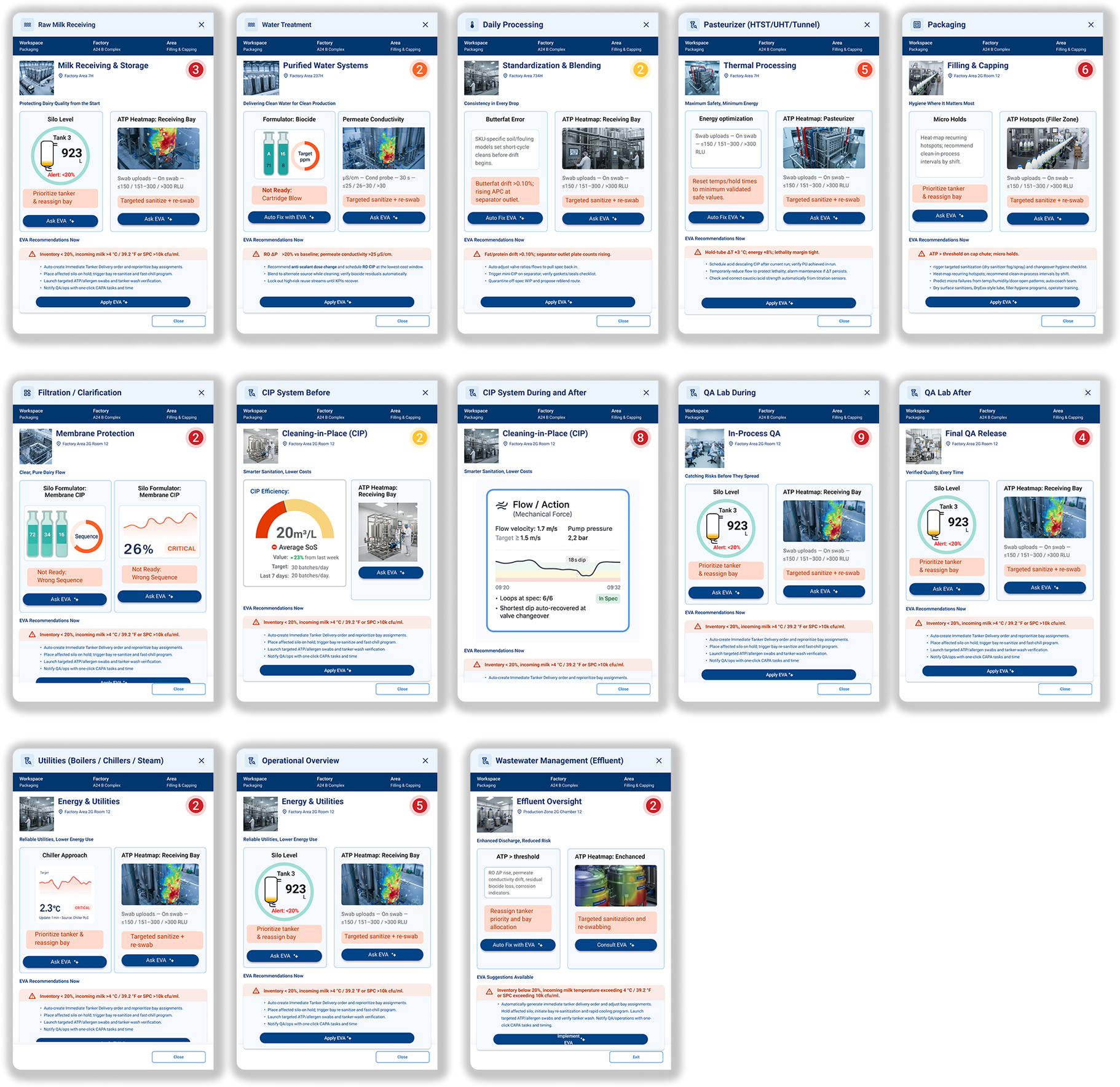
Designed predictive dashboard widgets with AI confidence indicators
- 05
Created guided action workflows for operational recommendations

Results
- •
Contributed to $20M funding for next-generation AI capabilities
- •
Delivered predictive dashboards and guided action workflows
- •
Prototyped AI agent concepts adopted by the engineering roadmap
Learnings
Designing for AI means designing for uncertainty. Users need to trust the system's recommendations, which requires transparent confidence indicators and clear explanations. Prototyping AI interactions early helps the entire team align on what the experience should feel like.